
No, Just Learning Python Will Not Get You Hired

One of the most common questions I hear is, “If I learn Python, will it guarantee me a job?” While learning Python is a fantastic decision that can open many doors, simply knowing the language may not be enough to secure a job. Think of it like a chef who knows all the ingredients but lacks the skills to turn them into a delicious meal. Yes, understanding the components is important, but the real value lies in applying them effectively. Similarly, to truly harness Python’s potential, you must demonstrate your ability to solve real-world problems.
In this article, we’ll explore ways to increase your chances of landing a Python-related job.
1. Employers Demand Skills, Not Just Syntax
Employers seek candidates with well-rounded skill sets. Basically, they want you to know both the tool and the job. True Python proficiency goes beyond syntax; it means being able to apply your knowledge to solve real-world problems. Understanding data structures, algorithms, and problem-solving methodologies is crucial.
Once you’ve mastered the fundamentals of Python, consider specializing in an area where Python excels. Here are a few in-demand fields
Data Science and Data Analysis: Employers look for candidates who can clean, manipulate, analyze, and visualize data to extract meaningful insights. Showcasing your ability to work with tools like NumPy, pandas, Matplotlib, and Scikit-learn can make you stand out. Gaining expertise in data analysis opens doors to roles such as marketing, business intelligence, and data engineering.
Web Development: If you choose web development, demonstrate your ability to build dynamic, scalable applications using Python frameworks like Django and Flask. Employers value candidates who can develop secure, efficient web solutions.
Cybersecurity: Python plays a vital role in cybersecurity, from network scanning and vulnerability assessments to penetration testing and security automation. If you’re interested in this field, start with Python fundamentals, then learn how to apply them to security operations.
These are just a few areas where you can specialize to showcase your Python skills. Specialization not only demonstrates your ability to apply Python practically but also significantly increases your appeal to potential employers.
Build the Confidence to Tackle Data Analysis Projects. [40% OFF]
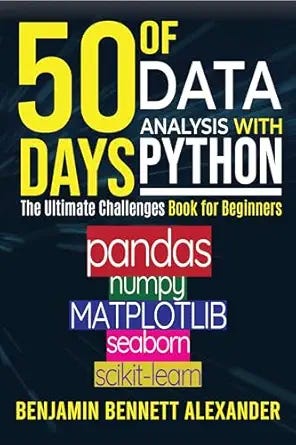
To build a successful data analysis project, one must have skills in data cleaning and preprocessing, visualization, modeling, EDA, and so forth. The main purpose of this book is to help you develop data analysis skills in Python by tackling challenges. By the end of 50 days, you should be confident enough to take on any data analysis project with Python. You can take advantage of the March discount by clicking here: “50 Days of Data Analysis with Python.”
Other Resources
Want to master SQL and be job-ready in 50 days? SQL Essentials for Data Analysis: A 50-Day Hands-on Challenge Book (Go From Beginner to Pro) [40% OFF]
Challenge yourself with Python challenges. Check out 50 Days of Python: A Challenge a Day.
100 Python Tips and Tricks, Python Tips and Tricks: A Collection of 100 Basic & Intermediate Tips & Tricks.
2. Communication Skills Matter
A common misconception is that exceptional coding alone guarantees success. However, writing great code isn’t enough. Employers also value candidates who can effectively communicate complex technical concepts to non-technical stakeholders.
For example, your data analysis findings are meaningless if you can’t clearly convey them to senior management. You’ll also need to collaborate with teammates, explain technical concepts to clients, and document your code in a way that others can understand.
As you refine your Python skills, don’t overlook the importance of strong verbal and written communication. Mastering both technical and communication skills will make you a more well-rounded and valuable candidate.
3. Integration is Key
Your Python skills shouldn’t exist in isolation. Most organizations rely on multiple tools and technologies in their workflows, and being able to integrate Python with them is essential.
For example, since most organizational data is stored in databases, a solid understanding of SQL is crucial for effective data interaction. If you’re using Python for web development, you’ll likely need to work with HTML, CSS, and JavaScript as well.
The key takeaway? Employers value adaptable, flexible candidates who are committed to continuous learning. Master Python, but also demonstrate your willingness to embrace new technologies as needed. This adaptability shows that you can thrive in dynamic work environments.
4. Showcase Your Problem-Solving Skills
Employers are looking for candidates who can solve real-world challenges, not just write code. Demonstrating strong problem-solving abilities, such as creativity, critical thinking, and resourcefulness, can set you apart. You can showcase these skills through past projects, case studies, or coding challenges.
Highlighting your experience in using Python to tackle real-world problems makes you a more attractive candidate. Actively work on projects that demonstrate your ability to analyze problems, identify solutions, showcase your domain knowledge, and overcome obstacles. Here are some examples:
Data Analysis Projects: Analyze and visualize datasets to uncover insights or solve business problems.
Automation Tasks: Use Python scripts to automate repetitive tasks, improving efficiency and saving time.
Web Applications: Develop a web application that addresses a specific need or provides a practical solution.
By building and showcasing such projects, you prove to employers that you can apply Python in meaningful ways to drive results.
Wrap-Up
In conclusion, learning just Python alone isn’t enough to stand out. Learning Python is just one half of the puzzle. Once you learn Python, you must also demonstrate problem-solving abilities, strong communication skills, and a willingness to learn complementary technologies.
By embracing this approach, you’ll transform from someone who simply knows Python into someone who can leverage it to solve real-world problems. So, keep learning, keep building, and keep growing!
If you found this article helpful, don’t forget to like, share, and subscribe to this newsletter if you haven’t already. Thanks for reading.