
5 Smart Ways to Learn Python with AI Without Losing Your Thinking Skills

AI works best as a supplement, not a substitute. Learn core concepts like loops, functions, file handling, and error handling from structured resources first
You cannot really learn anything without experiencing some level of struggle.
Before AI, learning Python was a slow, grinding process. There were no instant answers on demand. Bugs could take days to figure out, and some concepts took weeks before they truly made sense. Platforms like Stack Overflow offered relief, but even then you had to dig through threads, compare answers, and piece things together yourself. It was slow, sometimes frustrating, but that friction is what made the learning stick.
Now, with AI, everything feels easier. You can get solutions from a single prompt, explanations in seconds, and even full working code without much effort. But this convenience comes with a hidden problem: it creates the illusion of learning. You feel like you understand because you see the answer, not because you built the understanding yourself.
In this article, I’ll break down 5 practical ways to use AI while learning Python so that it strengthens your thinking instead of replacing it.
1. Use AI as a Personalized Task Generator and Project Mentor (Not a Code Writer)
One of the smartest ways to use AI when learning Python is to stop treating it like an answer machine and start treating it like a mentor. A lot of beginners make the mistake of asking AI to build entire projects for them. "Build me a weather app." "Create me a chatbot." "Write a web scraper." The problem is that you end up watching AI think while your own brain stays passive.
A much better approach is using AI to generate structured learning tasks while forcing yourself to do the actual implementation. For example, instead of saying, "Build me a weather app," you can say:
"Create a beginner-to-intermediate Python project for learning APIs. Make it practical and slightly challenging. Only give hints and not solutions if I ask."
You don’t want AI to do the project for you; you just want it to be a mentor. You still struggle through the logic yourself. You still debug errors. You still research concepts. But now you have guidance when you genuinely get stuck. This is more learning effective than asking AI to build the app.
During the building process, you will run into roadblocks. When you get stuck, don’t cry uncle and ask AI for the solution. What you need is guidance and tips. You want to arrive at the solution by yourself. Instead of asking for a code rewrite, ask questions that are about the problem:
Why is my JSON parsing failing here?
What concept am I misunderstanding with dictionaries?
Why does this loop create duplicate outputs?
Can you explain this traceback without giving me the final solution?
This style of learning builds problem-solving ability instead of dependency. This is exactly how many developers improve on the job. Senior engineers rarely sit beside you writing solutions line by line. They guide your thinking, point out blind spots, and help you reason through problems. Your goal is to use AI in the same way: as a senior engineer that challenges your thinking, not a tool that replaces it.
Another important thing is to build incrementally. One mistake beginners make is constantly jumping between random projects. Today it is a calculator. Tomorrow it is a chatbot. Next week it is machine learning. Nothing compounds. A much better strategy is expanding one project over time. Start with a simple CLI weather app. Then add error handling. Then caching. Then logging. Then environment variables. Then convert it into a Flask app. Then deploy it.
One small beginner project slowly evolves into something that actually resembles real software. Along the way, you naturally solidify loops, functions, error handling, and conditional logic. Ladies and gentlemen, this is where growth happens. It happens when you learn how to think through increasingly difficult problems.
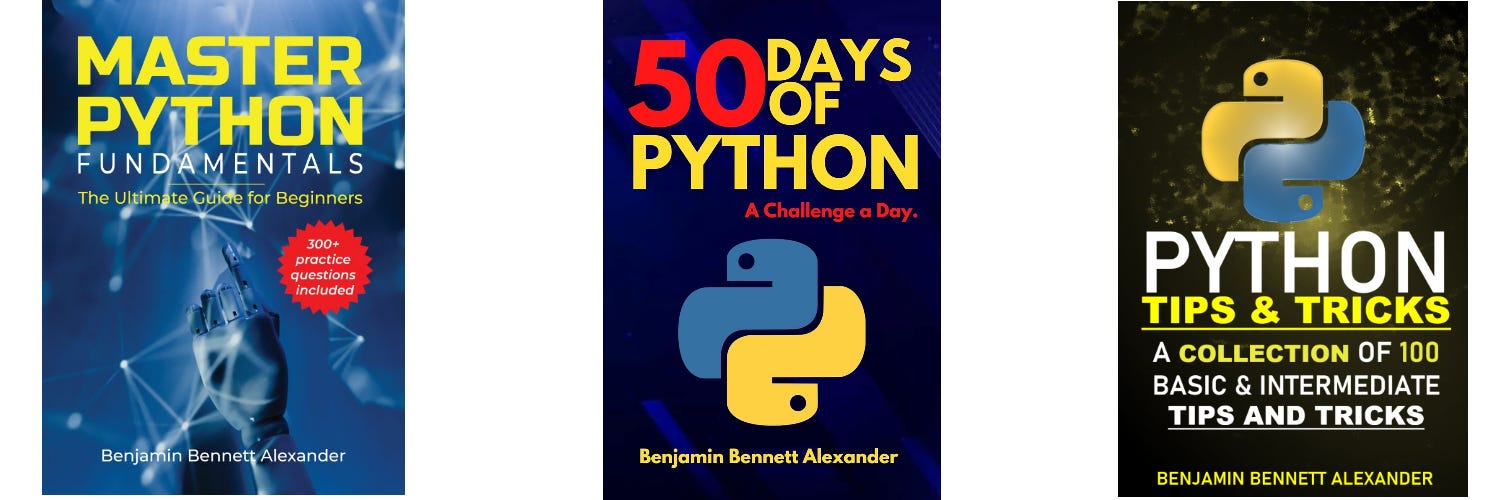
The Python Mastery Bundle
Master Python from the ground up with a hands-on learning bundle designed for beginners who want more than just theory. This bundle combines three practical Python books that help you build strong fundamentals, write cleaner code, and develop real problem-solving skills through consistent practice.
2. Ask for Explanations, Concepts, and "Why" Instead of Solutions
One of the biggest mistakes beginners make with AI is treating it like a vending machine for finished code. “Fix this.” “Build this.” “Give me the answer.” Do not do this when you are learning. If you are tired, take a break and come back the next day. Don’t take shortcuts. Such shortcuts may feel productive, but long term it weakens your ability to reason through problems independently.
A much smarter approach is using AI as a tutor instead of a code generator. Instead of saying, “Write a list comprehension for me,“ ask:
"Explain like I’m a beginner why list comprehensions are useful compared to for loops."
Instead of asking for complete pandas workflows, ask questions like, “When would I use pandas vs. Polars?” or “Why is this DataFrame operation slow?” That style of learning builds conceptual understanding instead of pattern memorization.
AI is also incredibly useful for learning how to debug. Instead of asking for a code fix, ask AI to walk you through how to read a traceback or ask what concept you are misunderstanding. Over-relying on generated solutions too early can slow down real growth. The goal is becoming someone who can diagnose and solve them confidently and understand how things work under the hood, instead of avoiding mistakes.
3. Leverage AI for Code Review, Refactoring, and Self-Assessment
One of the smartest ways to use AI is after you finish writing code, not before. Instead of asking AI to build projects for you, paste your own working code and ask things like:
"Review this script like a mentor and suggest improvements for readability, efficiency, and best practices."
You can also try to explain how you understand the code and ask AI if your explanation makes sense. This is powerful because learning does not only happen through writing code. It also happens through critique, reflection, and revision. AI can help you spot bad habits early, like inefficient loops, poor variable naming, weak error handling, or repetitive logic. Sometimes you think your solution is clean until AI shows you a much simpler or more Pythonic way to approach it.
Another underrated trick is using AI for self-testing. Ask it to generate variations of the same problem or create quizzes with increasing difficulty. Then try rewriting your solution later from memory. That combination of practice, feedback, and retrieval is where real retention starts happening.
4. Combine AI with Fundamentals from Books, Docs, and Structured Resources
The biggest misconception is thinking because you have AI, you won’t need any other resources. I have seen beginners make the mistakes of trying to replace fundamentals with AI completely. AI works best as a supplement, not a substitute. Learn core concepts like loops, functions, file handling, and error handling from structured resources first, whether that is books, official documentation, or well-designed courses.
Then use AI to deepen understanding. That combination works much better than blindly copying generated code because you already have a foundation to evaluate the answers critically.
This matters because AI is not always correct. Future programmers will not only need prompting skills. They will also need verification skills. The people who thrive will be the ones who combine strong fundamentals with the ability to use AI intelligently instead of depending on it blindly.
5. Iterate Iteratively with Prompts That Encourage Active Learning
One of the most effective ways to learn with AI is to stop thinking in single prompts and start thinking in iterations. Instead of asking for complete solutions, you can guide the learning process step by step. For example, you can say:
"Act as a Python tutor. I’m at beginner-intermediate level. Help me build this project step by step, but only give me the next hint after I show my attempt."
This forces you to think, attempt, fail, and refine before moving forward.
This approach works even better when combined with tools like Google Colab or Jupyter Notebook, where you can test code immediately and get explanations for errors in context. You are not just reading explanations; you are actively debugging and learning in real time.
As you improve, you can use iterative prompting for deeper exploration. Ask things like, "Is this OOP design good?" "What are better alternatives?" or “How does Python’s GIL affect concurrency in practice?"
The key is to stay in small, reviewable steps instead of jumping straight to final answers. The real learning happens in that loop: attempt, review, adjust, repeat.
Wrap Up
The real shift in learning Python with AI is not about finding better answers. It is about asking better questions and staying in control of your own thinking. If you use AI as a task generator, a tutor, a reviewer, and a guide for iteration, you stop passively consuming code and start actively building understanding. You do not want to be a copy-paste learner. You want to be someone who can solve problems independently.
AI should increase your thinking, not replace it. You still need fundamentals. You still need debugging struggles. You still need repetition and discomfort.
I will leave you with this:
Learning Python is like solving a puzzle. You can start with the pieces and put it together yourself, or you can look at a completed puzzle and try to reverse-engineer it. You will always learn more by doing the work of assembling it yourself than by studying someone else’s finished solution.
So struggle first. Then consult AI. Thanks for reading.
The Data Analyst Bootcamp Bundle (SQL + Python) 100 Hands-On Data Analysis Challenges
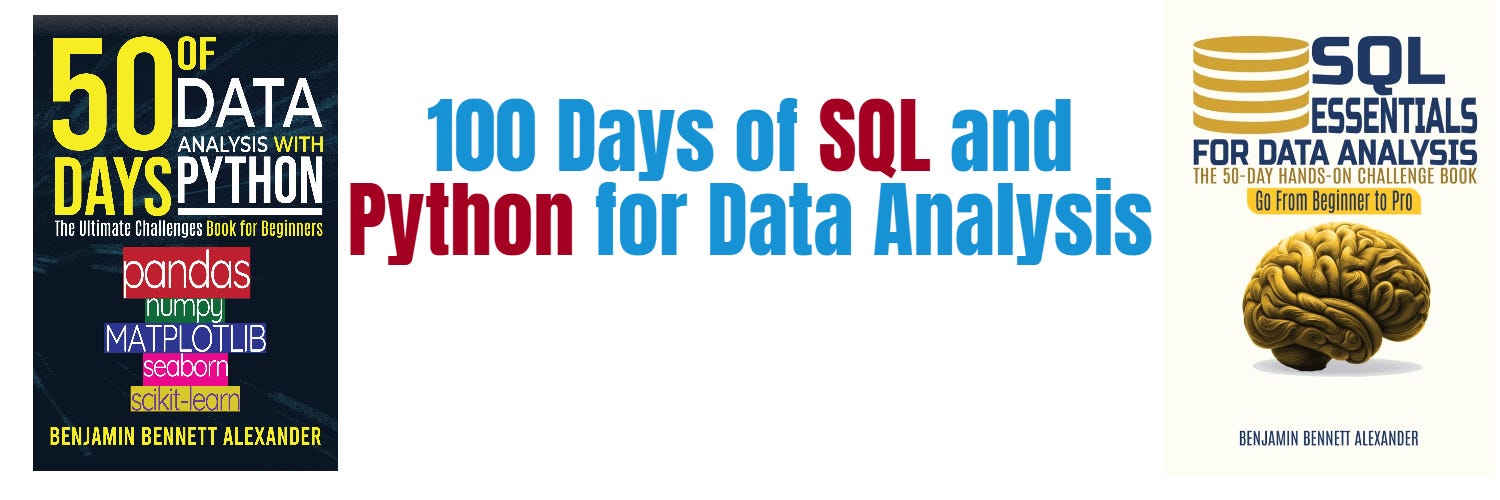
These are the best hands-on materials that teach how to use the important libraries in data analysis: pandas, Matplotlib, seaborn, NumPy, etc. You will also learn to write SQL queries by answering questions that data analysts face in the world, using real datasets. Get the bundle if you want real, practical learning.