3 Python Functions Every Aspiring Data Engineer/Analyst Must Know: Map, Filter, and Zip

Python has many functions, but not all functions are built equal, if you ask me. All functions are important, but there are some functions that are used more often than others in data engineering and analysis. This makes these functions a must-learn for all Python heads planning on working with data.
In this article, we’ll explore three powerful built-in functions: map, filter, and zip, and show exactly how you can use them in the real-world for clean, efficient, and reliable data transformations.
1. Map() For Applying Transformations at Scale
This is one of the most versatile tools in Python, used by both engineers and analysts. The main purpose of the function is to apply a given function to each item in an iterable. It is a higher-order function that takes two arguments: another function and an iterable.
Let’s say you have a list of numbers and you want to square every number in the list. You can use the map() function.
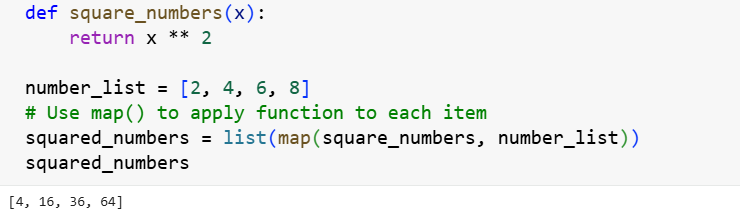
Here, we first define a function that squares a number. This function is then passed to the map() function, which applies it to every element in the list. Basically, we end up with a list where each number is squared.
In real-world data engineering and analysis, the map() function can be used in data cleaning and type conversion operations, such as converting strings to dates, floats, or standardized formats across millions of records. The advantage of using map() is that it processes data efficiently without loading everything into memory.
Let’s say we have raw data that we need to clean; here is how the map() function can help in this operation:
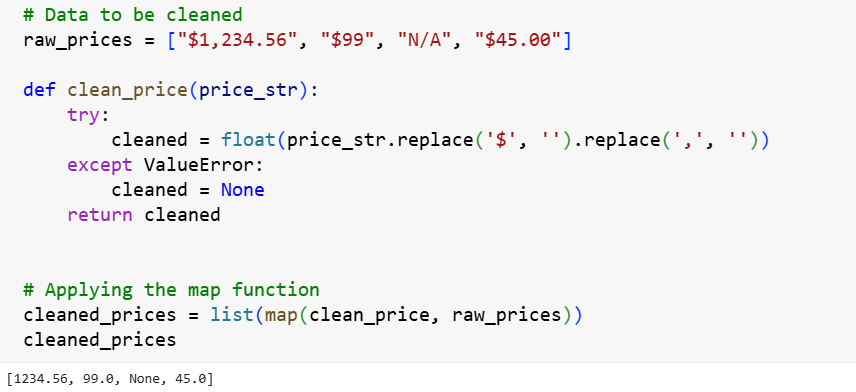
In this code, map() applies a function to every item in an iterable. It’s lazy (memory-efficient) and perfect for these types of operations (row-level transformations). The cool thing to note is that it is also possible to combine map() with lambda for quick operations.
The Python Mastery Bundle
Master Python from the ground up with a hands-on learning bundle designed for beginners who want more than just theory. This bundle combines three practical Python books that help you build strong fundamentals, write cleaner code, and develop real problem-solving skills through consistent practice.
2. Filter() For Keeping Only Valid Data
This is another powerful tool for analysts and engineers. The filter() function is used to filter elements from an iterable based on a given condition. It takes two arguments: a function and an iterable, and returns an iterator containing the elements that satisfy the condition. Here is an example:
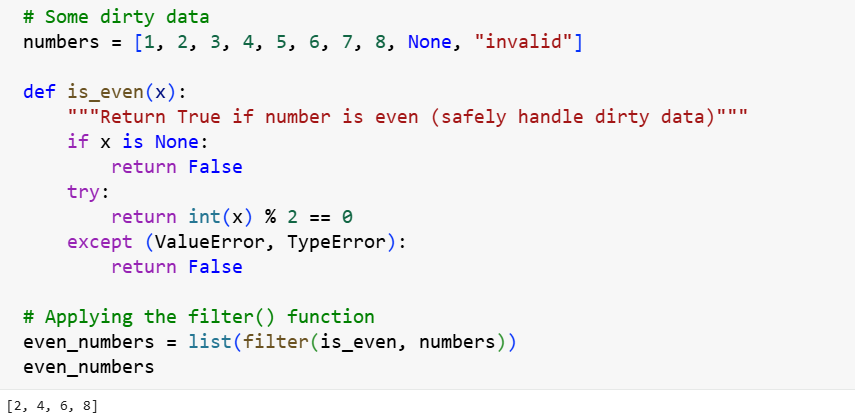
The filter() function uses the provided function to return only the even numbers from the list. The filter() function is a powerful tool for selecting elements from iterables based on custom conditions. It is also possible to use the filter() function with a lambda function. See below:
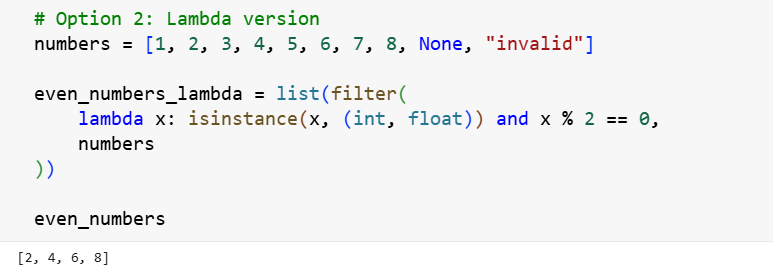
You can see that we get the same results. Use named functions with filter() when you need robust error handling and readability. Only use lambda for quick, simple conditions.
In data cleaning and transformation, the filter() function is perfect for removing bad records and creating clean datasets. Here is a simple example:
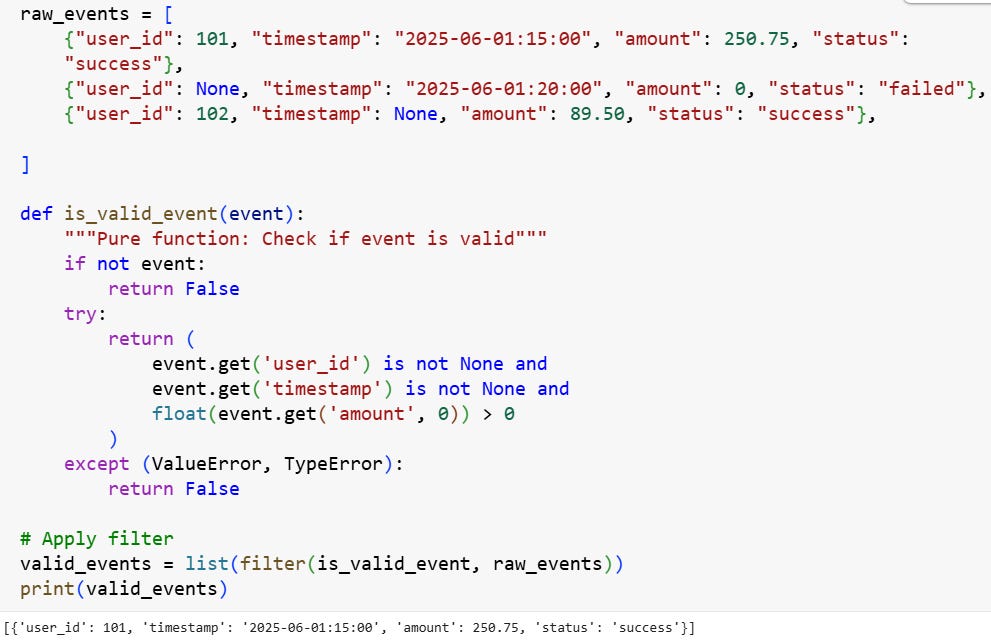
In this code, the filter() function iterates through each dictionary in the raw_events list and applies the is_valid_event() function to it. For every event, is_valid_event() first checks if the event exists, then uses a try-except block to safely evaluate three conditions: whether the user_id is not None, whether the timestamp is not None, and whether the amount (converted to float) is greater than zero. Clean, right?
3. Zip() For Pairing Multiple Sequences
This function is particularly useful because it allows you to combine elements from multiple iterables in parallel. This capability is highly valuable in data analysis and engineering, where data often comes from different sources.
For example, suppose we have a list of headers and a corresponding list of values, and we want to combine them into a dictionary. Here’s how we can use the zip() function:
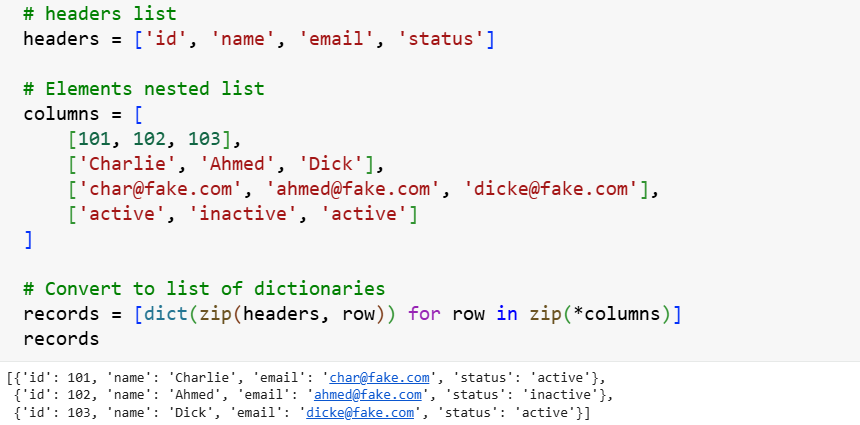
Look at that! It is that simple with the zip() function. Here, zip(*columns) unpacks the list of columns and pairs the elements by their position. The first element from each column forms the first tuple, the second element forms the second tuple, and so on. It stops when the shortest column is exhausted. Then, for each resulting tuple (row), dict(zip(headers, row)) combines the headers with the values to create a dictionary. This transforms raw columnar data into a clean list of records.
Wrap-Up
That’s about it. So, if you’re learning Python and you were wondering what you should concentrate on this week, I suggest focusing on these three functions: map, filter, and zip.
While they may seem simple at first, mastering them will help you write cleaner, more Pythonic, and more efficient code, especially when building data pipelines. These built-ins encourage a functional programming style that aligns perfectly with the “pure transformations” mindset valued by data engineers.
Start practicing them on real datasets. Clean messy API responses with map, validate records with filter, and merge columnar data using zip. The more you use them, the more natural they become. Happy coding, and keep the hunger for knowledge burning!
The Data Analyst Bootcamp Bundle (SQL + Python) 100 Hands-On Data Analysis Challenges
These are the best hands-on materials that teach how to use the important libraries in data analysis: pandas, Matplotlib, seaborn, NumPy, etc. You will also learn to write SQL queries by answering questions that data analysts face in the world, using real datasets. Get the bundle if you want real, practical learning.